Personalized Student Learning
Focused on improving learning outcomes through a unified, AI-powered experience—designed to support students from secondary education through college and into their professional lives.
Client:
Chegg
Role:
Senior UX Designer
Year:
2022 - 2024
The Challenge
The task of transforming a complex set of outdated tools into a seamless, AI-powered interface designed around the human learning experience is multifaceted and requires addressing several key challenges. These include:
Unifying multiple tools and fragmented user experiences into a single, cohesive journey—one we approached thoughtfully by centering student needs, modernizing the learning experience through decades of research and cognitive psychology, and enabling a smarter, more efficient level of personalization.
Strategically and contextually delivering the right learning resources at the right moment—leveraging AI to surface relevant support based on student intent, behavior, and progress, while reducing cognitive overload and decision fatigue.

Process
To address these challenges, we began by grounding our approach in a deep understanding of student behavior, needs, and pain points. We audited the existing ecosystem of tools to identify fragmentation, redundancy, and breakdowns in the user journey, then mapped key workflows to uncover where students experienced friction or disengagement.
These insights were paired with established principles from cognitive psychology and learning science to guide decision-making. We explored how students process information, manage cognitive load, and build understanding over time—using this to inform interaction patterns, content structure, and system responsiveness.
Through iterative design and validation, we tested ways to unify experiences and introduce contextual intelligence without overwhelming the user. This ensured that each decision balanced simplicity, flexibility, and personalization.
Solution
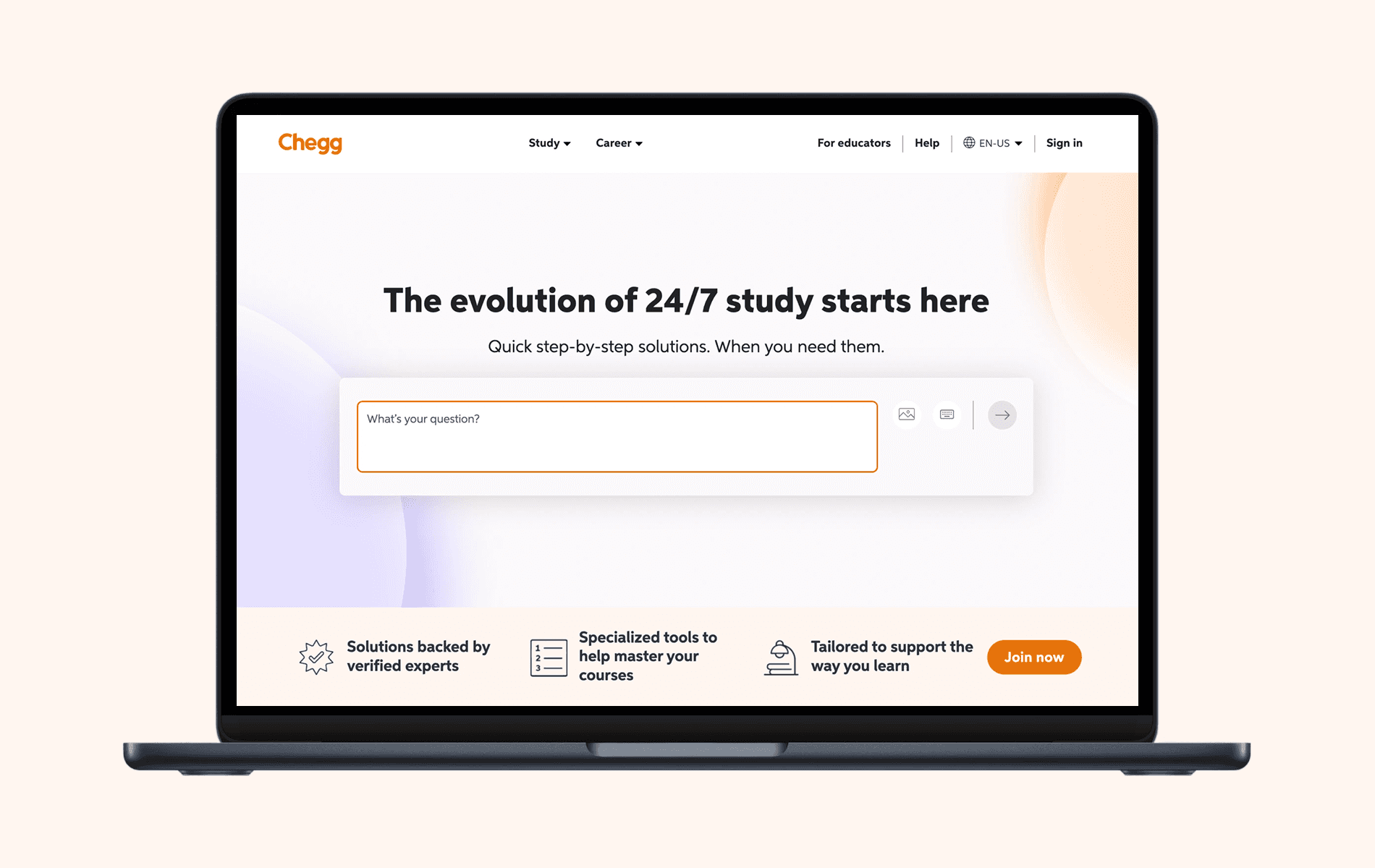
The resulting experience brings together previously disconnected tools into a single, cohesive interface centered around an AI-powered learning companion. Rather than requiring students to navigate between features, the system guides them through a continuous, goal-oriented journey that adapts to their needs in real time.
Core to this solution is the ability to deliver contextually relevant resources at the right moment. By interpreting user intent, behavior, and progress, the platform surfaces tailored support—whether that’s explanations, next steps, or supplementary materials—without requiring manual search or decision-making.
This creates an experience that feels both streamlined and intelligent: reducing friction, minimizing cognitive overload, and enabling a more personalized and efficient path to learning.
Key takeaways
This work reinforced a few core principles:
Unifying fragmented tools into a cohesive journey significantly reduces cognitive overhead and improves user engagement.
Context-aware systems are most effective when they balance personalization with simplicity, avoiding unnecessary complexity.
Grounding design decisions in behavioral insights and learning science leads to more intuitive and impactful experiences.
AI is most valuable when it operates seamlessly in the background, supporting users without demanding attention.